
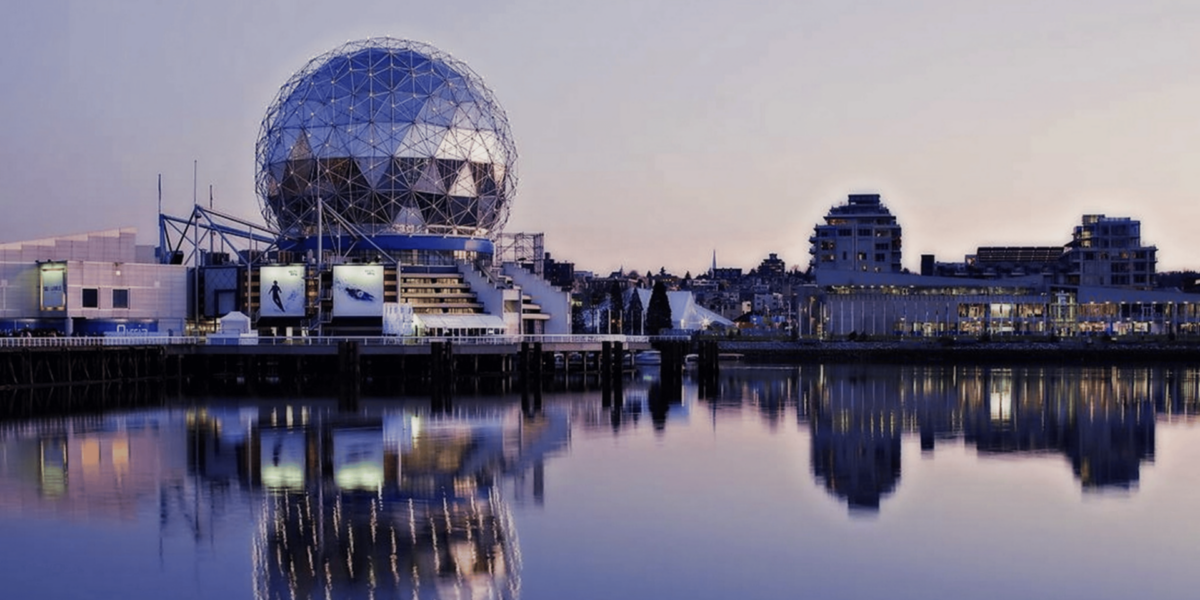
Why Twilight Transforms Vancouver’s Skyline
Twilight changes how Vancouver’s architecture interacts with its environment. The fading light softens sharp lines while accentuating glass, steel, and concrete against a glowing horizon. Buildings that stand tall during the day become silhouettes or radiant beacons as evening takes over. This daily transformation reveals the city’s balance between structure and atmosphere.
How Steel Structures Reflect the Evening Light
Steel towers dominate much of Vancouver’s skyline, and at twilight, they shift character. The metal frames catch the last rays of the sun, reflecting streaks of orange and pink across their surfaces. As the sky darkens, artificial lights within the towers glow through glass façades, creating layers of reflection that merge building with atmosphere. This interplay of steel and light makes twilight a defining moment for the city’s visual identity.
Glass and Sky Create a Dynamic Canvas
Glass buildings magnify the effect of twilight by mirroring the sky. Their surfaces reflect shifting colors, from deep blue at dusk to golden tones as the sun sets. This creates the illusion that the buildings are part of the sky itself. The constant change in color and tone turns architecture into a canvas, evolving moment by moment as twilight progresses.
A Realistic Scene of Architecture at Twilight
A pedestrian pauses on a downtown street as twilight settles. The glass towers around them catch the last hues of the setting sun, their steel frames glowing faintly in the fading light. Streetlamps flicker on, and office windows begin to sparkle against the deepening sky. The city feels suspended between day and night, with steel and sky weaving together into a single composition.
Why Twilight Bridges Nature and Structure
Vancouver’s twilight bridges the natural world with its urban form. The mountains and ocean frame the skyline, while buildings reflect the changing colors above. This blending of natural light and human-made structure highlights Vancouver’s identity as a city built within a dramatic landscape. Twilight emphasizes that the skyline is not separate from its setting but shaped by it.
The Role of Contrast in Twilight Architecture
Contrast defines twilight architecture. As light fades, the dark outlines of towers stand out sharply against the sky. Illuminated windows punctuate the darkness, while reflections on glass soften rigid edges. This balance of shadow and light creates depth, giving the skyline a layered complexity that daytime cannot reveal.
How Movement Brings the Twilight Skyline to Life
The architecture of twilight is never static. Cars stream along bridges, their headlights tracing paths across steel frameworks. Reflections ripple on water as boats move through the harbor. Street-level activity adds rhythm to the scene, reminding viewers that the skyline is not only structure but also movement. Twilight captures this duality by blending the permanence of architecture with the energy of the city.
Twilight as a Marker of Urban Identity
Twilight becomes a daily marker of Vancouver’s identity. Each evening, the city shifts into a new form—buildings glowing against the sky, streets illuminated with movement, and steel structures defined by light and shadow. This recurring transformation shapes how residents and visitors remember Vancouver, reinforcing the skyline as both symbol and experience.
How Weather Influences the Twilight Skyline
Weather changes how twilight appears over Vancouver’s architecture. Clear evenings sharpen outlines, while clouds scatter light into dramatic layers. Rain amplifies reflections on streets and glass façades, turning the skyline into a living mirror. Mist softens edges, blending towers into the horizon. Each variation creates a distinct atmosphere, proving that twilight never repeats itself exactly.
The Lasting Power of Steel and Sky in Vancouver
Steel and sky define the architectural experience of Vancouver at twilight. Buildings reflect both natural light and human energy, creating a dialogue between permanence and change. This moment each day captures the city’s essence: a place where design meets environment, and where twilight turns architecture into an evolving canvas of identity and presence.